 Skip to content



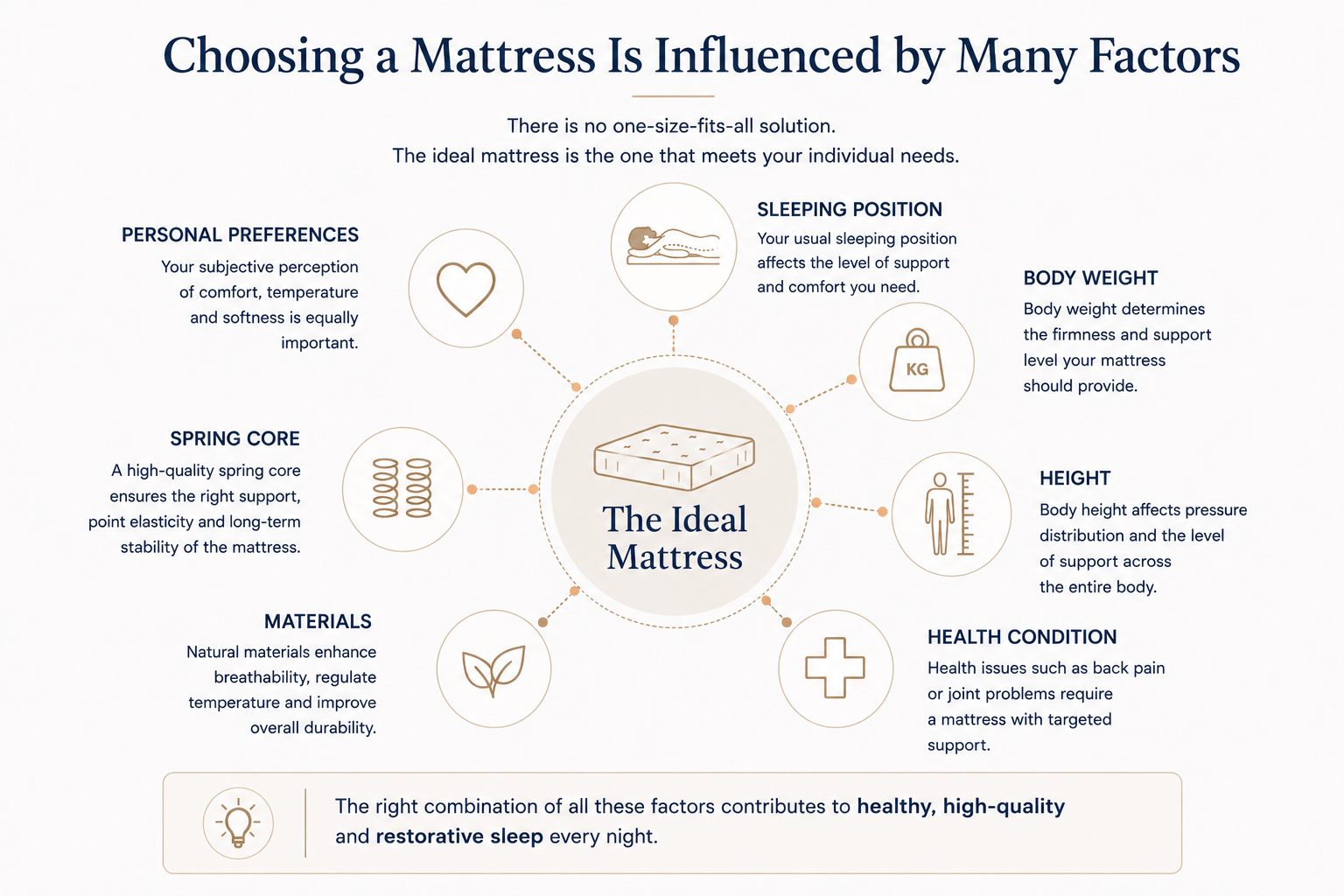
Sleeping position is one of the most important factors when choosing a mattress, but it is not enough on its own. Everyone has a different body type, health condition, and individual preferences, all of which significantly influence the final choice.
Body Weight
Body weight affects how deeply the body sinks into the mattress. What provides ideal support for one person may be too soft—or, conversely, too firm—for another.
Height and Body Proportions
Body weight distribution varies from person to person. Some people experience greater pressure in the shoulder area, while others feel it in the pelvic area. A high-quality mattress should naturally compensate for these differences and provide support exactly where it is needed.
Age and Individual Needs
As we age , our needs for comfort and body support may change . The choice of a mattress is also influenced by past experiences, sensitivity to pressure, health status, and personal preferences. Therefore, there is no single solution that will suit everyone.
Mattress Materials and Construction
Comfort isn’t determined by firmness alone. The materials used, the layering method, and the core construction itself are just as important.
Natural materials, such as wool, cotton, silk, and horsehair, help naturally regulate temperature and humidity while you sleep. High-quality pocket springs provide precise point-by-point support and contribute to the mattress’s long lifespan.
It is preciselythe combination of high-quality materials, thoughtful design, and precise craftsmanship that sets a premium mattress apart from standard options. The result is not only greater comfort but also the long-term ability to provide the body with proper support during everyday use.
Why Trying Out a Mattress in Person Is Still the Best Option
When choosing a mattress, technical specifications, the materials used, and expert recommendations all play an important role. However, even the most detailed description cannot replace personal experience.
The feeling of comfort is largely a matter of personal preference. What suits one person may not be the right choice for another. Differences in body type, body weight, sleeping position, or personal preferences only become fully apparent once you actually try out a mattress.
A visit to the showroom isn’t just about lying down on a mattress for a moment. Part of the selection process is a professional consultation that takes into account your sleeping habits, body type, and your expectations for a new mattress. The goal isn’t to find the firmest or softest model, but a solution that will provide your body with proper support for many years to come.
Choosing a high-quality mattress is an investment in everyday comfort and a good night’s sleep. That’s why it’s worth taking the time to make an informed decision based on your own experience, not just on technical specifications or recommendations from the internet.
What should you consider when choosing a mattress?
Choosing a mattress isn’t just about its firmness. To ensure it provides you with proper support and comfort for many years to come, be sure to consider the following factors in particular:
✔ Sleeping position – Do you usually sleep on your side, on your back, or on your stomach?
✔ Body weight and proportions – Every body exerts a different amount of pressure on a mattress, so there is no one-size-fits-all solution.
✔ Proper spinal support – The mattress should support the spine’s natural alignment in every position.
✔ Materials and Construction – The overall comfort is influenced not only by the materials used, but also by the core construction and the mattress’s ability to distribute pressure evenly.
✔ Breathability and temperature regulation – High-quality natural materials help create a comfortable microclimate throughout the night.
✔ Try it out for yourself – Technical specifications are important, but they can’t replace your own experience. Always try out a mattress before buying it and consult with an expert.
Remember: The right mattress isn’t the hardest or the softest one. It’s the one that best adapts to your body and your sleeping style.